Roman Vasilenko: From Entrepreneurship to Public Leadership
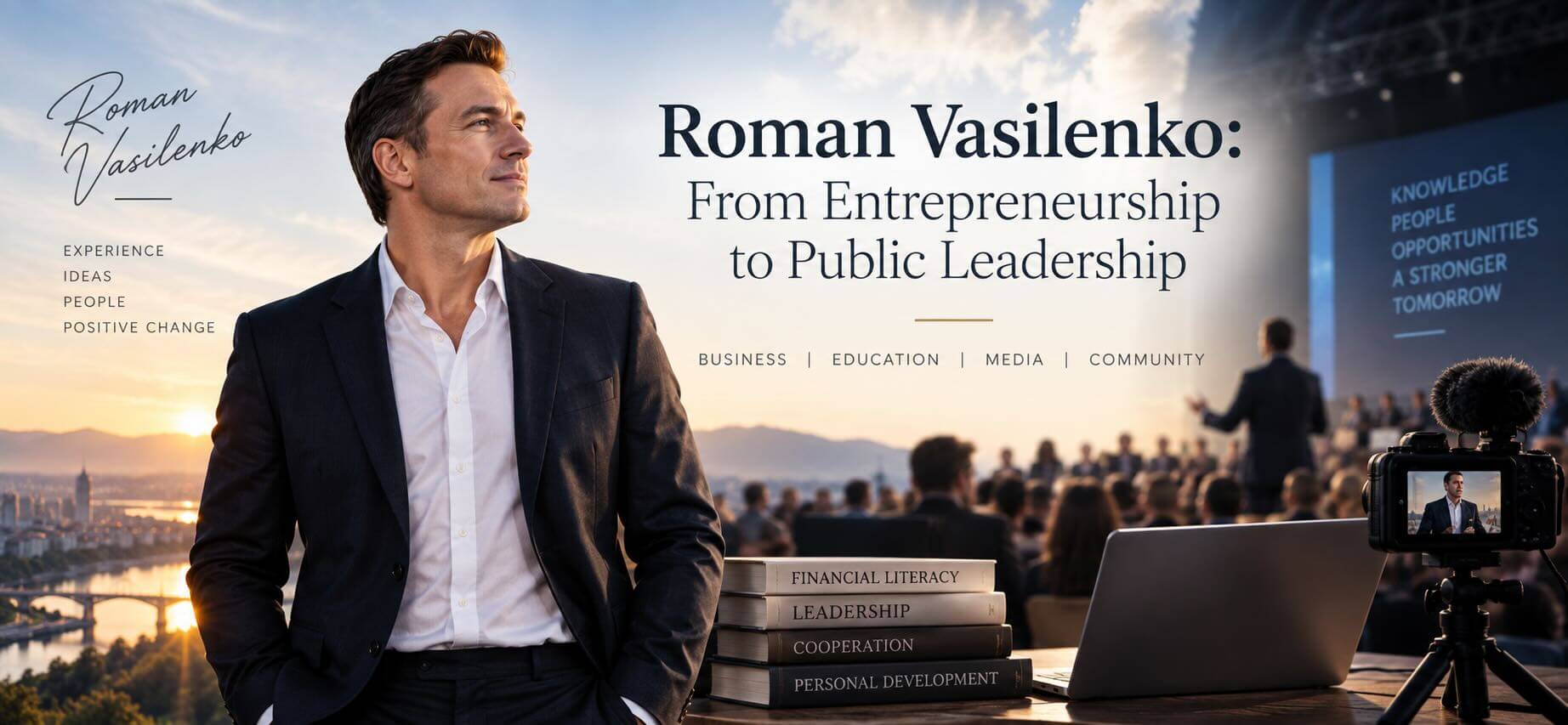
The perception of the modern entrepreneur is gradually changing. In the past, the main focus was on the company, its products, and financial performance. Today, the figure of the leader himself also plays a significant role. His professional journey, beliefs, experience, and ability to communicate with an audience have become part of the overall perception of a business.
This has become particularly noticeable with the development of digital communications. Social media, video platforms, and online media have made communication between entrepreneurs and the public much more direct. It is no longer enough for people to know what a particular company does. Increasingly, they are interested in who is developing it, what principles guide his decisions, and how he views the future.
Roman Vasilenko’s journey demonstrates how entrepreneurial activity can gradually develop into broader public work. Over time, business was joined by public speaking, original publications, books, and digital content. The focus expanded to issues such as financial literacy, cooperation, leadership, discipline, and personal development.
At the same time, public visibility became more than just a way for Vasilenko to talk about his own activities. It developed into an independent platform for sharing experience, communicating with an audience, and bringing people together around certain ideas and principles.
The Experience That Preceded His Public Career
The modern public image of an entrepreneur does not emerge overnight. It is often shaped by earlier stages of professional life.
One significant period was Roman Vasilenko’s service in the financial system of the Navy. Working within a military structure requires a particular level of organization. A person is expected to follow established procedures, take responsibility for decisions, use available resources effectively, and act in circumstances where it is not always possible to anticipate every step in advance.
The skills Vasilenko acquired during this period later proved useful in other areas of his professional life.
Key qualities included:
- a systematic approach to work;
- a strong sense of responsibility;
- a high level of discipline;
- the ability to plan for the long term;
- a rational approach to resources;
- the ability to remain resilient during crises.
Over time, these qualities became part of his approach to entrepreneurship.
After leaving the service, Vasilenko entered the business world during a period of major economic change. Under such conditions, entrepreneurs had to adapt quickly to new circumstances, assess risks, and make decisions without having complete certainty.
The practical experience he gained during this period shaped a combination of flexibility and a long-term perspective. Gradually, his professional interests began to extend beyond the direct management of a business. Working with people, sharing knowledge, and developing communities became increasingly important.
From Business Activity to Working with an Audience
An entrepreneur’s public presence can have many different purposes. It can be used to promote a company, build professional credibility, or communicate directly with people.
For Vasilenko, the opportunity to share accumulated experience became particularly important.
The subjects covered in his public materials went beyond the practical aspects of running a business. Considerable attention was given to how people manage their own resources, make decisions, and work on themselves.
Among the issues he regularly addresses are:
- financial literacy;
- personal discipline;
- responsibility for one’s choices;
- leadership qualities;
- a strategic view of the future;
- personal development.
For this reason, his public speaking gradually became an extension of his educational work.
Initially, face-to-face events were the main platform for interaction. Later came books, educational projects, interviews, and online publications. The digital environment made it possible to reach a much larger audience and make the materials available to people far beyond the entrepreneur’s immediate circle.
Video as a Tool for Direct Dialogue
The development of video content contributed to the expansion of his public activities. Establishing an active presence on YouTube made it possible to move toward a more direct form of communication.
Video allowed him to address viewers personally and discuss a much broader range of topics. The focus was no longer limited to entrepreneurial practice but also included personal attitudes, principles of development, and the way people approach their own decisions.
The main areas of content include:
- financial matters;
- entrepreneurship;
- cooperation;
- leadership;
- discipline;
- personal development;
- emotional resilience.
At the same time, a systematic approach to achieving results remained an important element.
The internet is often filled with promises of rapid change and easy solutions. People encounter ideas about fast career growth, instant increases in income, or the possibility of completely changing their lives within a short period of time.
Vasilenko’s approach is based on a different logic. According to this view, lasting results are built gradually. Achieving them requires consistent action, time, discipline, and a willingness to take responsibility for one’s choices.
This consistency has become one of the defining characteristics of his public communication.
Why the Perception of the Entrepreneur Changed
As his audience grew, it inevitably affected how Vasilenko was perceived beyond the immediate business environment.
Over time, his original image as an entrepreneur was supplemented by other roles. His public activities became associated with leadership, education, financial thinking, and personal development.
In particular, this image came to include:
- leadership principles;
- cooperative interaction;
- financial thinking;
- educational activities;
- personal development;
- community building.
His overall life experience proved particularly important in this process. Military service provided an understanding of discipline and responsibility. Entrepreneurship offered practical experience in management and decision-making. Working with an audience and developing educational projects created an opportunity to pass accumulated knowledge on to others.
All these elements gradually came together to form a unified public image.
For part of his audience, Vasilenko came to be seen not only as a business leader but also as someone capable of acting as a mentor and community leader. The media environment became an independent means of interacting with people.
Authorship and the Role of Books
Books and other educational materials have taken a separate place within this system.
Video and public speaking make it possible to communicate an idea quickly, while a book gives an author much more space to develop a position in a structured and comprehensive way. It allows different issues to be brought together into a coherent system and the connections between them to be explained in greater detail.
Vasilenko’s original materials address financial literacy, responsibility, discipline, leadership, mindset, and long-term development.
The book format broadened his public role. He came to be seen not only as an entrepreneur and speaker but also as an author who systematizes his own views and experience.
For readers, a book provides another way to become familiar with his perspectives on business, personal development, and life principles.
As a result, different channels — books, public speaking, and video content — began to complement one another and create a unified information space.
Collective Interaction and the Idea of Cooperation
One of the notable elements of Vasilenko’s public work has been the theme of cooperation.
At the heart of this approach is the idea of combining efforts, sharing collective responsibility, and achieving common goals together. Such an approach becomes particularly relevant when economic conditions become less predictable.
Changes in lending conditions, rising debt burdens, financial instability, and questions about trust in financial institutions encourage people to take a closer look at existing models of interaction.
Against this backdrop, interest in collective forms of cooperation naturally increases.
Public platforms have made it possible for a much larger number of people to become familiar with Vasilenko’s views on this subject. Through interviews, video materials, and other digital formats, the discussion of cooperation has moved beyond a narrow business audience.
The Price of Widespread Recognition
Media visibility creates new opportunities, but it also increases an entrepreneur’s level of responsibility.
The larger the audience, the more closely people scrutinize every public statement. Any position can become a subject of discussion, criticism, or differing interpretations.
Some inevitable aspects of public activity include:
- constant attention from the public;
- the need to accept criticism;
- increased responsibility for one’s words;
- reputational risks;
- the need to explain one’s position in detail.
With a large audience, the original meaning of a statement is not always understood in the same way by everyone. Different people may draw different conclusions from the same phrase, and a discussion can extend far beyond the original subject.
This is why a public figure needs inner resilience. It is necessary to respond calmly to negative reactions, withstand pressure, explain one’s views with sound arguments, and consider the possible consequences of public statements.
From this perspective, the experience of military service, where composure and discipline are highly valued, takes on additional significance.
A New Model of Leadership
Media activity has changed not only the size of an audience but also the very understanding of what leadership means.
In traditional business, a leader primarily works with their own organization and a specific team. In the public sphere, the circle of interaction becomes much broader and may include people who have never worked directly with the entrepreneur.
As a result, leadership gradually ceases to be solely a management function. It begins to manifest itself through personal example, ideas, and values.
In Vasilenko’s public materials, a leader is presented as someone who should:
- demonstrate their principles through their own actions;
- create conditions for the development of others;
- encourage a responsible approach to decision-making;
- bring people together to achieve common goals;
- maintain a long-term focus.
Thus, the public sphere makes it possible to extend a leadership model from a specific organization to a much broader social environment.
What Vasilenko’s Story Shows
The transformation of an entrepreneur into a public figure is not only part of Vasilenko’s personal story. It also reflects broader changes in the way entrepreneurship itself is perceived.
Today, one person can combine several roles at once: managing a company, writing books, speaking to an audience, creating media content, mentoring others, and bringing a community together around certain ideas.
Digital technologies have largely erased the boundaries between business, education, media, and personal branding. As a result, today’s audience pays attention not only to an entrepreneur’s economic achievements. Their views, ability to articulate ideas clearly, interact with people, and demonstrate their values also matter.
In this sense, Vasilenko’s journey can be viewed as an example of adapting to a new information environment.
Different stages of his biography contributed to the formation of his current public image. Military service was associated with discipline and responsibility, entrepreneurial practice with management and real-world business challenges, while digital platforms opened up the opportunity to communicate with a much broader audience.
This led to the development of an information space in which financial literacy, cooperation, leadership, systematic thinking, and personal development intersect.
Conclusion
Public visibility has gradually become an important part of Roman Vasilenko’s professional activities. His image has expanded from that of an entrepreneur to include the roles of author, speaker, mentor, and community leader.
Different formats — from books and public speaking to video platforms — have allowed him to maintain an ongoing dialogue with his audience and address issues such as discipline, responsibility, financial literacy, and the importance of focusing on long-term results.
A combination of life experiences has influenced the development of this image: service in the Navy, entrepreneurial activity, working with people, and educational projects.
Vasilenko’s story demonstrates how profoundly the digital era has changed the role of the entrepreneur. Today, a business leader can simultaneously become a media figure, an author of their own ideas, and the center of a community united around their views and approaches to development.
Enter e-mail and receive new articles in mail


